Analytical chemistry is the area of chemistry that focuses on the qualitative and quantitative analysis of substances (analytes) found in the sample. In other words, analytical chemistry deals with the separation, identification, and determination of substances in a sample. It also covers chemical equilibrium and statistical treatment of data. To do this, we need to know the physical and chemical properties of these substances.
Anything that comes to mind in the air, water, soil, food, and living things is considered a sample. Examples include a piece of rock, a piece of meat, water from the house’s tank, water from a river, a lake, or the sea, as well as tissue or blood from people, animals, or vegetables. and so on. After pretreatment, the sample is brought to the laboratory and examined for its constituents (analytes). The last step is to determine the percentage of each component in the sample. A component of a sample that is examined and its concentration measured is called an analyte.
Types of Analytical Chemistry:
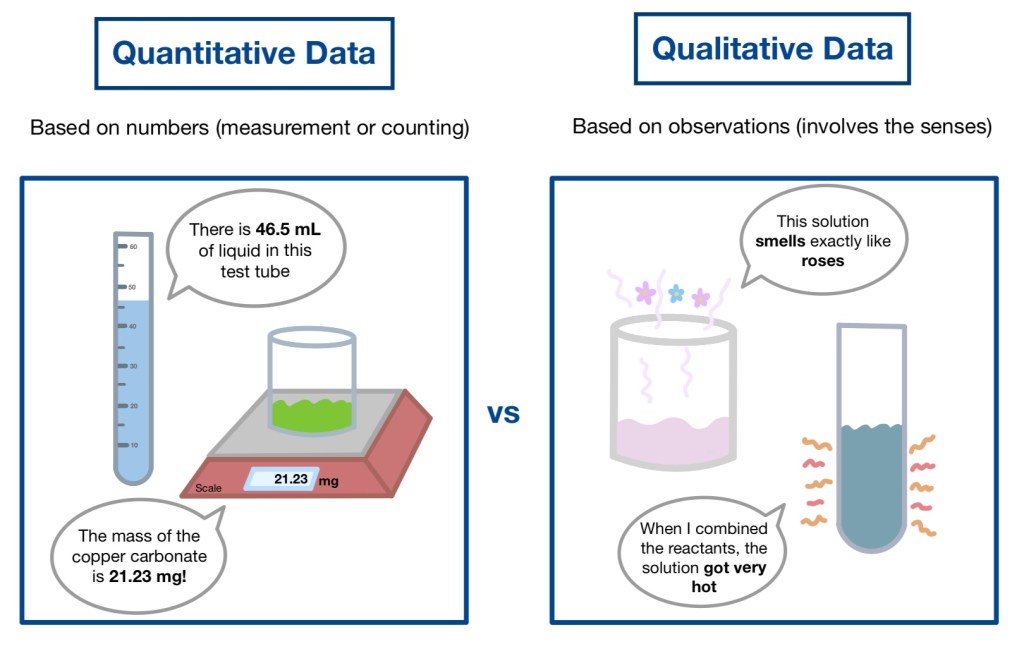
Analytical chemistry can be divided into two broad categories of analysis: qualitative analysis and quantitative analysis. As we will see, each of these two categories can be either classical or instrumental.
Qualitative Classical Analysis:
The type of all or some of the substances (elements, ions, or compounds) present in the sample are detected (identified) by this analysis. In other words, it provides an answer to the question: What substances are present in a sample? These substances can be detected by a chemical reaction. For instance, adding a solution of silver nitrate to the sample solution results in the formation of a white precipitate, which indicates the presence of chloride ions.

Qualitative Instrumental Analysis: Currently, there are numerous instruments that can separate and distinguish substances (organic or inorganic) in the sample, including gas chromatography – mass spectrometry (GC – MS), high performance liquid chromatography – mass spectrometry (HPLC – MS), infrared spectra (ir ), and induced coupled plasma – mass spectrometry (ICP – MS) or ICP – AES (Atomic Emission Spectrometry).

Quantitative Analysis: Depending on the concentration of the substance in the sample, this analysis employs two types of analysis: instrumental analysis and classical chemical analysis. It provides information about the amount of all or some of the substances present in the sample.
Types of quantitative analysis :
Types of quantitative analysis. Although quantitative analysis is based on numbers, it can be approached in a number of ways. There are several types of this analysis, such as: Regression Analysis Statisticians, economists, business owners, and other professionals frequently use regression analysis. It comprises using statistical equations to forecast or estimate how one variable affects another. For instance, it can show how interest rates affect consumers’ choices regarding asset investments. Another crucial application of regression analysis is determining how work experience and education affect employes’ yearly salaries.
Regression analysis is a useful tool for business owners to determine how advertising expenses impact revenue. A business owner can use this technique to ascertain whether two factors have a positive or negative correlation.
Linear programming :The majority of businesses sometimes struggle with a lack of resources, such as office space.


Leave a comment