Sampling:
- Sampling is the process of getting a sample that represents the whole
- Sampling is a very important step in testing because the results depend on how well the sample represents the whole.
- A sample can be solid, liquid, gas, or it can be either the same throughout (homogenous) or mixed (heterogeneous).
- A sample is like a small part of the whole.
Its makeup should be very similar to the whole. - Homogenous Sample: A single sample taken quickly (a grab sample) is often enough.
For example, in a medical lab, blood or urine is usually tested directly because it is homogenous. - Heterogeneous Sample: You need to take several small samples.
For instance, if you want to find the average protein content in a shipment of grain, you should take a little grain from each bag while loading or unloading using a sampling tool (like a sack sampler) and mix them all together to make a final sample.
Gross Sample: consists of several portion of
the material to be tested
Laboratory Sample: consists of a small portion
of gross sample made homogenous
Analysis Sample is that which is actually
analyzed
Sampling of solids
Solid samples are often the hardest to collect.
(They are not uniform, have different particle sizes, and may have variations inside each particle.)
Solids are usually not the same throughout, so samples must be taken carefully.
Solids come in many different forms, and each form needs a different sampling method.
Grab Sample: A grab sample is a random sample that is thot to be representative. o Only homogenous samples are satisfactory; o 1/50th of the total bulko is the easiest but less reliable; o The best and easiest time to sample is during transportation.
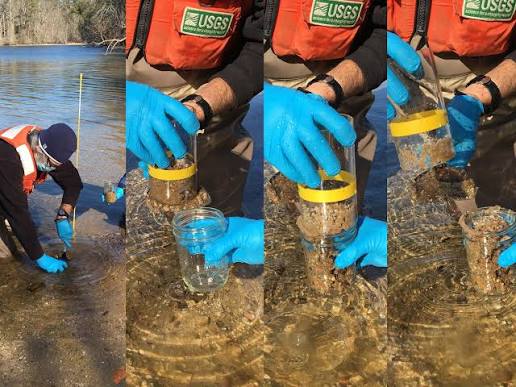
Collection of sediments:
Sediment Sampling Tool Types of Sediment Sampling Tools and Their UsesFiled under: Equipment Selecting the appropriate sampling tool for sediment collection can be more difficult than most people realize. Choosing the best tool for the job can be difficult with hundreds of options and new technology every year. We will talk about surface sampling tools in this short article. We’ll write another piece about subsurface sampling equipment after this. The layer of material we find on the surface of the seabed is called sediment, sometimes known as mud and less frequently as seafloor soils. This layer, which varies in hardness and softness, is frequently combined with wood, trash, and pollutants in developed areas and harbors. The majority of the biological activity in the sediment and a significant portion of our industrial history are found in this crucial surface layer down to 15 cm. Important Considerations for Sediment Sampling Tool Selection: Always choose a sample that minimizes disturbed samples.
Sampling of Ores:
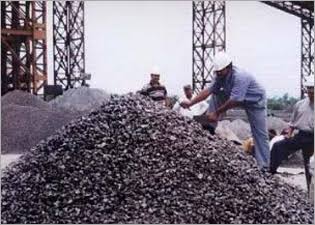
Soil samples: gathered from depths of up to 30 cm are readily collected using scoops or shovels, although this method tends to exhibit higher sampling variance. A more effective approach for acquiring near-surface soil samples is to employ a soil punch. This thin-walled steel tube retains a core sample when inserted into the soil and withdrawn. Soil samples from depths exceeding 30 cm are procured by digging a trench and collecting lateral samples with a soil punch. Alternatively, an auger can be employed to drill to the desired depth, and the sample can then be collected using a soil punch. Sampling particulate materials is often contingent upon particle size. Larger particulate solids, such as coal and ores, can be sampled by either randomly collecting samples with a shovel or using a riffle. A riffle is a trough divided into compartments, with adjacent compartments emptying on opposite sides. When particulate material is introduced into a riffle, it is separated into two portions. By repetitively passing half of the separated material back through the riffle, a sample of the desired size can be obtained. Smaller particulate materials, like powders, are best collected using a sample thief, which enables simultaneous collection from multiple locations.
Sampling of metals and Alloys:
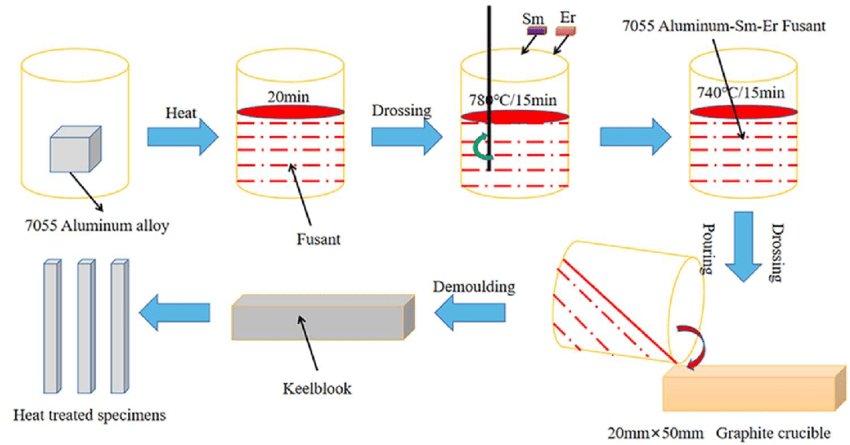
When sampling a metal, it is typically essential to acquire material from both its surface and interior. In the case of a metal sheet, random samples can be procured using a metal punch. For metal wires, samples can be obtained by randomly cutting pieces of suitable length. Larger metal items, like bars or bricks, are most effectively sampled by sawing the metal at randomly chosen locations and collecting the resulting “sawdust.” Alternatively, drilling through the metal and gathering the shavings is another viable method. Surface coatings can be sampled directly in their place or by dissolving the coating using an appropriate solvent. To sample biological tissue, the organ is removed and homogenized before smaller sections are extracted for analysis. As an alternative, a composite sample can be created by combining multiple tiny pieces of tissue. After homogenizing, the composite sample is examined.
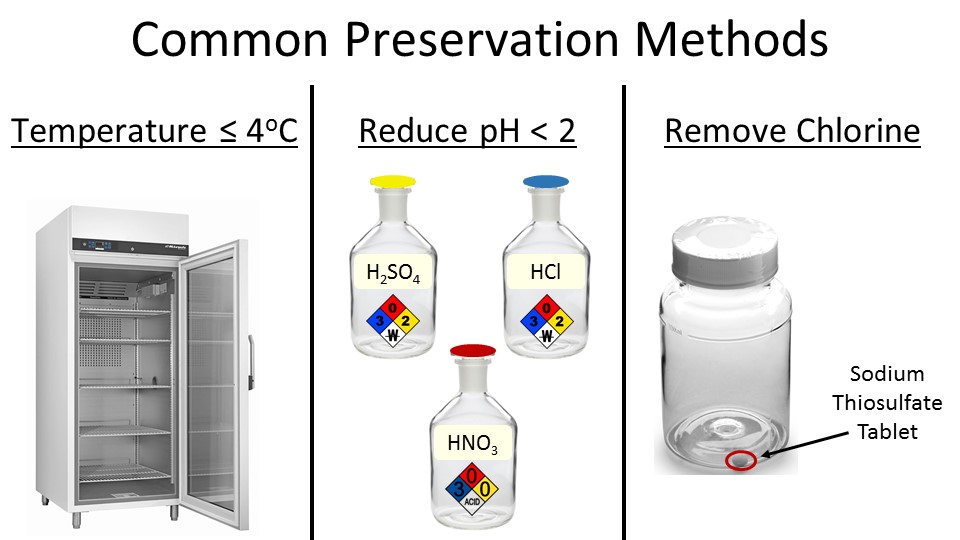
Sample Preservation: In the absence of preservation, the chemical composition of numerous solid samples might alter as a result of biodegradation, volatile material loss, and chemical reactivity, especially redox processes. While there is less chance of biodegradation and volatile material loss in samples kept at lower temperatures, phase separations and fracture could still cause issues. To reduce the amount of volatile material lost, make sure the sample fills the container all the way to the top without creating a headspace where gases can gather. Samples taken from materials that have not come into contact with oxygen are more prone to oxidation processes. For instance, it’s important to keep anaerobic sediments and air apart.
streams, rivers, lakes, estuaries, and oceans, are typically gathered using either a bottom grab sampler or a corer. Grab samplers are designed with a pair of “jaws” that close upon contacting the sediment, effectively scooping it up. These samplers offer advantages in terms of ease of use and the capacity to collect substantial samples. However, they have certain drawbacks, including the tendency to lose finer sediment particles as water drains from the sampler, as well as the compromise of spatial information, both horizontally and in terms of depth, due to the blending of the sample.


Leave a comment