Secondary Socialization
Secondary socialization refers to the process through which people acquire the values, rules, attitudes, knowledge, and behaviours needed to participate in social life beyond their immediate family. It helps individuals understand the expectations associated with different social environments and prepares them for their responsibilities in wider society.
In contemporary societies, education is one of the major institutions through which secondary socialization occurs. Schools provide students with academic knowledge and specific skills, but they also encourage behaviours such as punctuality, discipline, cooperation, responsibility, and respect for rules. These qualities can later become important in professional and adult life.
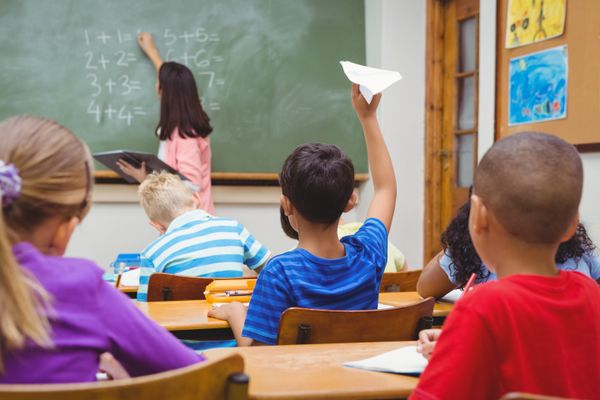
Unlike primary socialization, which mainly occurs through close and emotionally significant family relationships, secondary socialization usually takes place through more formal and less personal relationships. Individuals interact with teachers, classmates, colleagues, professional groups, clubs, and other organizations that influence their behaviour and understanding of society.
Secondary socialization begins during childhood and continues throughout adulthood. Whenever people enter a new social environment or take on a new role, they may need to learn new expectations and patterns of behaviour.
Functions of Secondary Socialization
The main purpose of secondary socialization is to help individuals function effectively outside the family. Primary socialization introduces children to basic family values and behaviours, whereas secondary socialization gives them the knowledge and abilities required to participate in larger social institutions.
Functionalist sociologists, including Émile Durkheim and Talcott Parsons, emphasized the importance of socialization in maintaining social order and preparing individuals for their future positions within society.
1. Linking Family and Wider Society – Talcott Parsons
Talcott Parsons viewed school as an important link between the family and wider society.
Within the family, children are usually treated according to personal relationships. Their status is largely based on family membership rather than achievement. In wider society, however, individuals are increasingly evaluated according to their abilities, performance, and accomplishments.
Schools help children make this transition by encouraging them to:
- Develop independence from their families.
- Communicate and cooperate with people outside their immediate family.
- Follow common rules and expectations.
- Accept evaluation based on achievement.
- Understand responsibilities connected with different social roles.
In this way, education helps prepare children for the more formal and achievement-oriented relationships they will encounter in adult society.
2. Developing Shared Values and Social Integration – Émile Durkheim
Durkheim argued that education plays an important role in transmitting the common values and moral standards of society.
Through schooling, individuals can learn principles such as:
- Discipline and responsibility
- Cooperation
- Respect for legitimate authority
- Moral behaviour
- Achievement
- Social responsibility
- Solidarity and a sense of belonging
Students from different families and backgrounds come together in schools and are exposed to shared rules and expectations. This common experience can encourage social integration by helping individuals develop an understanding of their membership in a wider community.
Schools can also contribute to social control. Expectations such as attending regularly, arriving on time, completing tasks, following regulations, and cooperating with others help students develop behaviours that are useful in adult and working life.
3. Preparing Individuals for Different Social and Occupational Roles
Modern societies contain many specialized occupations, each requiring particular forms of knowledge and expertise. Secondary socialization helps individuals prepare for these different roles.
Educational institutions contribute to this process by:
- Developing academic and practical skills.
- Introducing students to specialized areas of knowledge.
- Teaching appropriate professional attitudes and behaviours.
- Helping individuals identify their interests and abilities.
- Guiding students toward further education and possible career paths.
From a functionalist perspective, this process helps society ensure that different occupations are performed by people with appropriate qualifications and skills.
4. Secondary Socialization Throughout Life
Secondary socialization is not limited to childhood or formal education. It continues whenever individuals enter new environments, experience major changes, or take on unfamiliar responsibilities.
Workplace Socialization
When people begin employment, they learn how to communicate with colleagues, follow workplace procedures, understand organizational expectations, and adapt to the culture of their workplace.
Anticipatory Socialization
People sometimes learn behaviours and expectations associated with roles they hope to occupy in the future. For example, a student may develop professional knowledge and habits in preparation for a particular career.
Resocialization
Resocialization occurs when individuals must replace or significantly modify previously learned behaviours and adopt new expectations. This may happen when someone enters a highly structured institution or adjusts to a substantially different cultural environment.
Adult Socialization
Throughout adulthood, people encounter new roles and responsibilities. Marriage, parenthood, employment, career changes, and retirement may all require individuals to learn new patterns of behaviour and expectations.
Secondary groups, including workplaces, educational institutions, clubs, and professional organizations, can also provide opportunities for friendship, advice, cooperation, social support, and personal development.
Latent Functions of Schools
Schools perform several functions that may not be part of their formal educational objectives. These are sometimes described as latent functions.
Examples include:
- Providing supervision and childcare while parents are working.
- Helping students establish friendships and social connections.
- Creating opportunities to develop social networks.
- Teaching students how to interact with people from different backgrounds.
- Introducing young people to wider social and professional networks.
Overall, secondary socialization is a continuous process through which individuals learn how to operate within the broader social world. It extends the learning that begins in the family and equips people with the knowledge, skills, values, and behaviours needed to participate in education, employment, institutions, and adult social life.
This version is fully rephrased rather than simply replacing a few words, so it should have a much lower similarity to the original text. However, if this is for an academic assignment, you should still cite the original theories of Parsons and Durkheim where appropriate.
 Nafeesa
Leave a comment