Mushrooms belong to neither the plant nor the animal kingdom. They are fungi, and people across Asia, Europe, and the Americas have eaten them and used them as folk remedies for millennia. Today they are everywhere in the wellness world, from mushroom coffee to powders, capsules, and snack bars.
The marketing often runs ahead of the research, so this guide sorts out which mushrooms are worth buying and what the studies show.
Why Eat Mushrooms at All?
Mushrooms are light on calories, fat, and sodium, yet they pack in nutrients:
- B vitamins (riboflavin, niacin, pantothenic acid) that help convert food into energy
- Minerals such as selenium, copper, and potassium
- Fiber, including beta-glucans that feed healthy gut bacteria
- Antioxidants like ergothioneine and glutathione, which mushrooms contain in far greater amounts than most other foods
- Vitamin D, when the mushrooms have been exposed to sunlight or UV light. This is unusual for a food that isn’t from an animal.
Large population studies link regular mushroom eating with better overall diets and, in some cases, lower death rates from certain diseases. These studies only show association, not cause. Mushroom eaters often have other healthy habits, especially eating more vegetables.
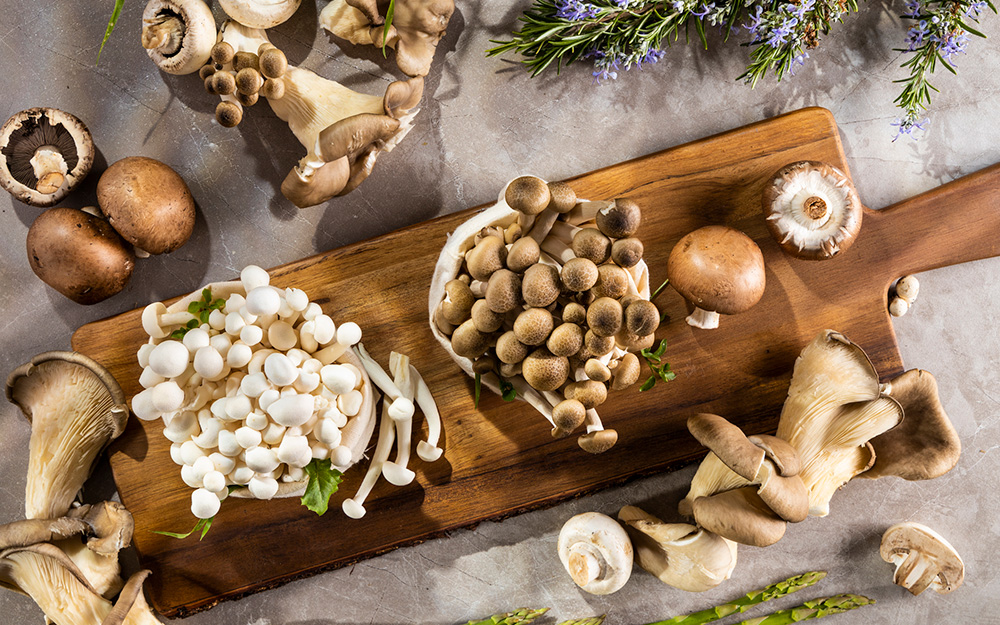
Shiitake (Lentinula edodes)
A popular, deeply savory mushroom, common in stir-fries and broths.
- Key nutrients: Copper, selenium, B vitamins. Its polysaccharide lentinan has been researched in Asia as an immune-modulating aid in cancer treatment.
- Evidence: Solid as a nutritious food, early for immune benefits. In one small trial, healthy adults who ate cooked shiitake daily for four weeks showed shifts in immune markers, but the finding needs confirmation.
- Tip: Save the woody stems, which are edible but too tough to eat directly, for simmering into stock. Always cook shiitake thoroughly, since eating them raw or undercooked can trigger a skin rash.
Lion’s Mane (Hericium erinaceus)
Shaped like a shaggy white pom-pom, with a mild, seafood-like taste.
- Key compounds: Hericenones and erinacines, which stimulated nerve growth factor in lab and animal studies. That is why it’s nicknamed the “brain mushroom.”
- Evidence: Early. A few small human trials exist. In one, older adults with mild cognitive impairment scored better on cognitive tests while taking it, but the gains faded once they stopped. The studies were brief and small, so the results are promising but not conclusive.
- Tip: Sear thin slices in butter or oil until golden for a meaty bite. For supplements, check whether the product uses the fruiting body or mycelium grown on grain, as they differ in composition.
Reishi (Ganoderma lucidum)
A hard, woody mushroom, usually brewed as tea or taken as an extract or powder.
- Key compounds: Triterpenes and polysaccharides, studied for immune support, stress relief, and sleep.
- Evidence: Limited. A few small studies hint at benefits for fatigue and sleep, but reviews describe the overall findings as mixed.
- Cautions: Reishi may thin the blood slightly and lower blood pressure, so it could interact with blood thinners and blood pressure drugs. Some powdered products have been linked to liver injury. Skip it if you have a bleeding disorder or upcoming surgery unless your doctor says otherwise.
Oyster Mushrooms (Pleurotus ostreatus)
Soft, fan-shaped clusters with a mild taste and silky texture. They are widely available and easy to grow at home.
- Key nutrients: More protein than most mushrooms, plus fiber, niacin, potassium, and antioxidants. They also contain lovastatin, the compound that led to cholesterol-lowering statin drugs, though at far lower levels than in medication.
- Evidence: Strong as a nutritious food, early for health effects. Animal studies show benefits for cholesterol and blood sugar, but human data is lacking.
- Tip: Tear them by hand and roast at high heat until crisp at the edges. They turn slimy when cooked in liquid.
Maitake (Grifola frondosa)
Also called “hen of the woods,” with ruffled clusters and a rich, earthy taste.
- Key compounds: A beta-glucan extract called the D-fraction, plus fiber and vitamin D.
- Evidence: Early. Small studies and animal work point to possible effects on blood sugar, cholesterol, and immunity, but few human trials exist.
- Cautions: Because it may lower blood sugar, anyone on diabetes medication should talk to a doctor before taking maitake supplements.
Cordyceps (Cordyceps militaris and relatives)
In nature, cordyceps is a parasite that grows on insects. The supplement versions are nearly always cultivated on grain or other material.
- Key compounds: Cordycepin and polysaccharides, marketed for energy and stamina and tested in athletes.
- Evidence: Mixed. A few small studies saw modest gains in exercise performance, especially in older adults, while others found nothing in athletes. Product quality varies widely.
- Tip: Choose products that name the species and the part of the mushroom used, and begin with a small dose.
Turkey Tail (Trametes versicolor)
A thin, fan-shaped bracket fungus with colorful stripes. It is too tough to eat, so it is sold as tea or extract.
- Key compounds: The polysaccharides PSK and PSP, used in China and Japan alongside conventional cancer treatment and studied for immune and gut health.
- Evidence: Stronger than for most medicinal mushrooms, but only in a specific setting. The research centers on clinical cancer care rather than healthy people. It is not a replacement for medical treatment, and anyone with a health condition should check with their doctor first.
White Button, Cremini, and Portobello
These are one species at different stages of maturity, and they are the cheapest and easiest mushrooms to find.
- Key nutrients: Potassium, selenium, B vitamins, and ergothioneine. Varieties exposed to UV light can supply a meaningful dose of vitamin D.
- Why they count: They are simple to eat often, and consistency is where most of the benefit likely comes from. Don’t dismiss them for being ordinary.
Whole Mushrooms vs. Supplements
Whole culinary mushrooms are the safest option and the best studied. Supplements offer concentrated extracts but bring some risks:
- Quality control: Supplements face less oversight than medications. Independent tests have found products with less active ingredient than labeled, or with unlisted additives.
- Dosing: Studies used different extracts and amounts, so there’s no standard dose.
- Interactions: Some mushrooms can affect blood clotting, blood sugar, and blood pressure.
- What to look for: Products verified by a third party such as USP or NSF, with the fruiting body listed as an ingredient.
Getting the Most from Your Mushrooms
- Cook them. Heat softens the tough chitin in their cell walls, making nutrients easier to absorb and neutralizing toxins in some types.
- Mix it up. Each variety brings a different set of nutrients and compounds.
- Store in paper. Keep them in a paper bag in the fridge, since plastic traps moisture and encourages bacteria.
- Clean gently. Brush off dirt or wipe with a damp cloth rather than soaking.
- Sneak them in. Chop them finely and blend into ground meat dishes or other favorite meals.


Leave a comment